



Some homes showcase paintings or sculptures. Others celebrate wine.
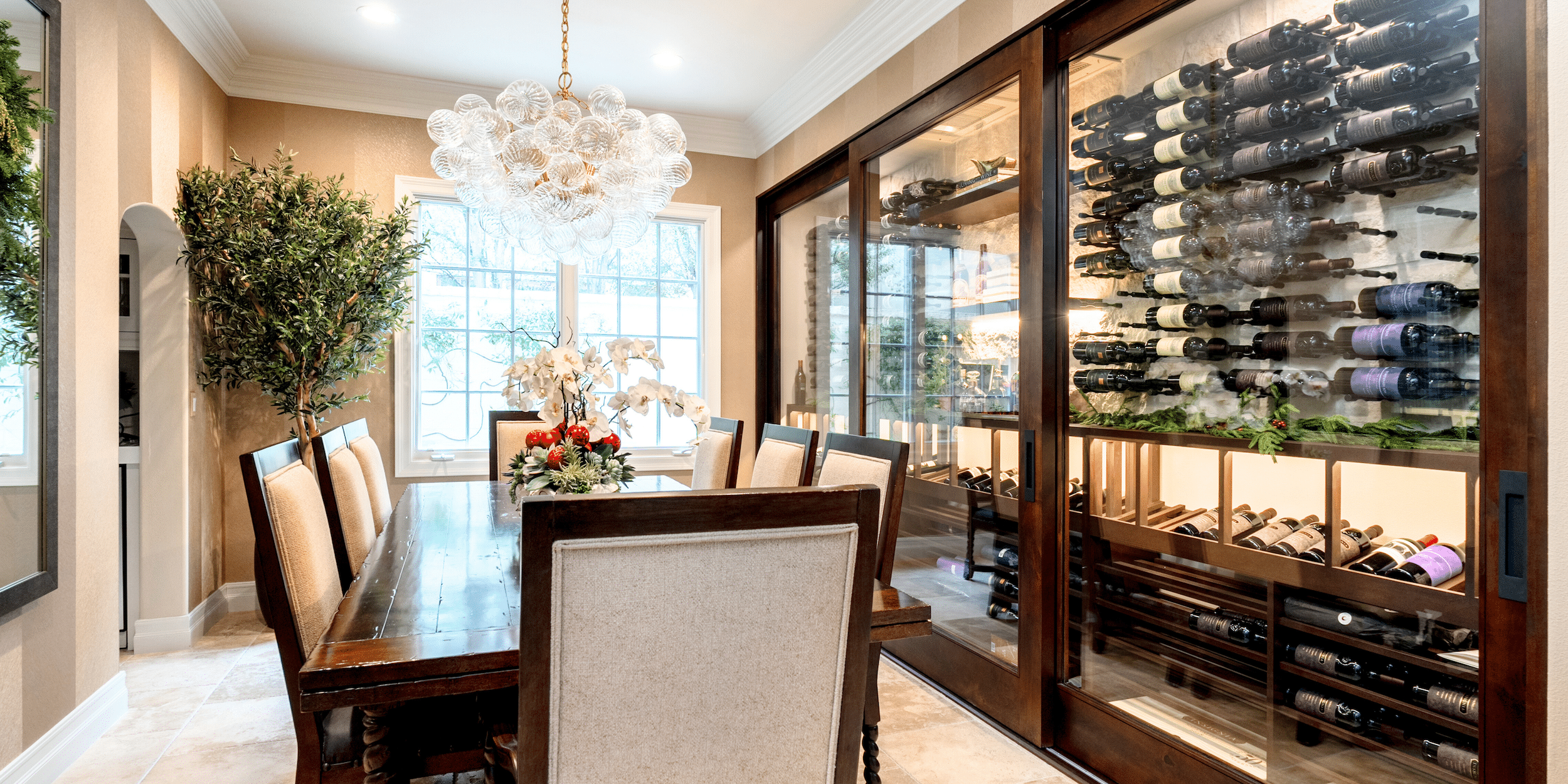
In this wonderful residence, the homeowners chose to turn their collection into the focal point of everyday living through a dining room glass wine cellar designed and built by Cachet Wine Cellars—a space that blends architecture, craftsmanship, and wine preservation. Instead of storing bottles out of sight, this installation places them at the center of the dining experience, visible through floor-to-ceiling glass panels that frame the collection like a curated gallery. The result is a striking yet refined design feature that instantly elevates the space while protecting hundreds of carefully selected bottles.
Why a Dining Room Glass Wine Cellar Creates Instant Impact
Wine collectors often hide their cellars in basements or spare rooms, but placing one directly in the dining area completely changes how people experience the collection.
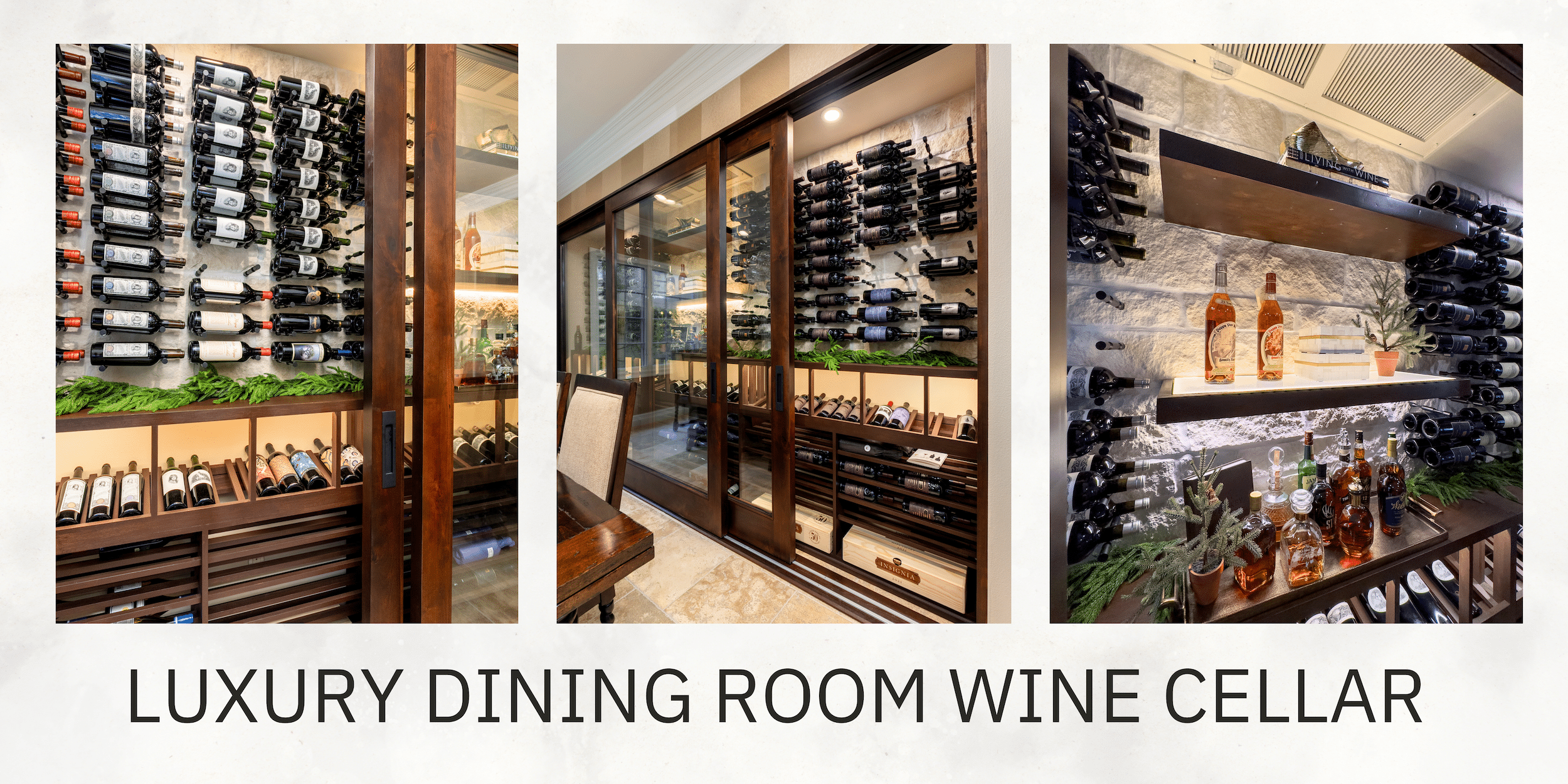
This dining room glass wine cellar holds approximately 450 bottles while serving as a striking architectural feature. Installed along the dining room wall, the glass enclosure keeps the collection constantly on display, creating an elegant backdrop for meals and gatherings.
Rather than separating storage from the living space, the design integrates the cellar into the room itself—refined, modern, and visually engaging.
A Vision That Balances Display and Preservation
The homeowners wanted more than simple bottle storage. They envisioned a space that honors the craft of winemaking while complementing the home’s modern interior.
To bring that vision to life, the design team selected materials that feel both contemporary and timeless. Clear glass reveals the collection from every angle, while steel components add structure and durability. Natural wood finishes soften the overall composition, introducing warmth and depth.

The design stays clean and minimalist, allowing the bottles themselves to become the centerpiece.
Rebuilding the Space to Make the Design Possible
Although the finished cellar looks effortless, the team completed significant structural work before construction could truly begin.
They repositioned the existing archway to accommodate the new layout and opened the walls down to the framing so they could run electrical lines and refrigeration components. After installing the infrastructure, the team rebuilt the space and finished it with carefully chosen materials that support both the visual design and the technical needs of the wine room.
They also introduced a limestone accent wall as the backdrop of the cellar, adding texture and contrast against the glass enclosure and metal display elements.
Craftsmanship and Materials That Elevate the Display
A carefully engineered racking system anchors the center of the installation, maximizing storage while keeping the display visually striking.
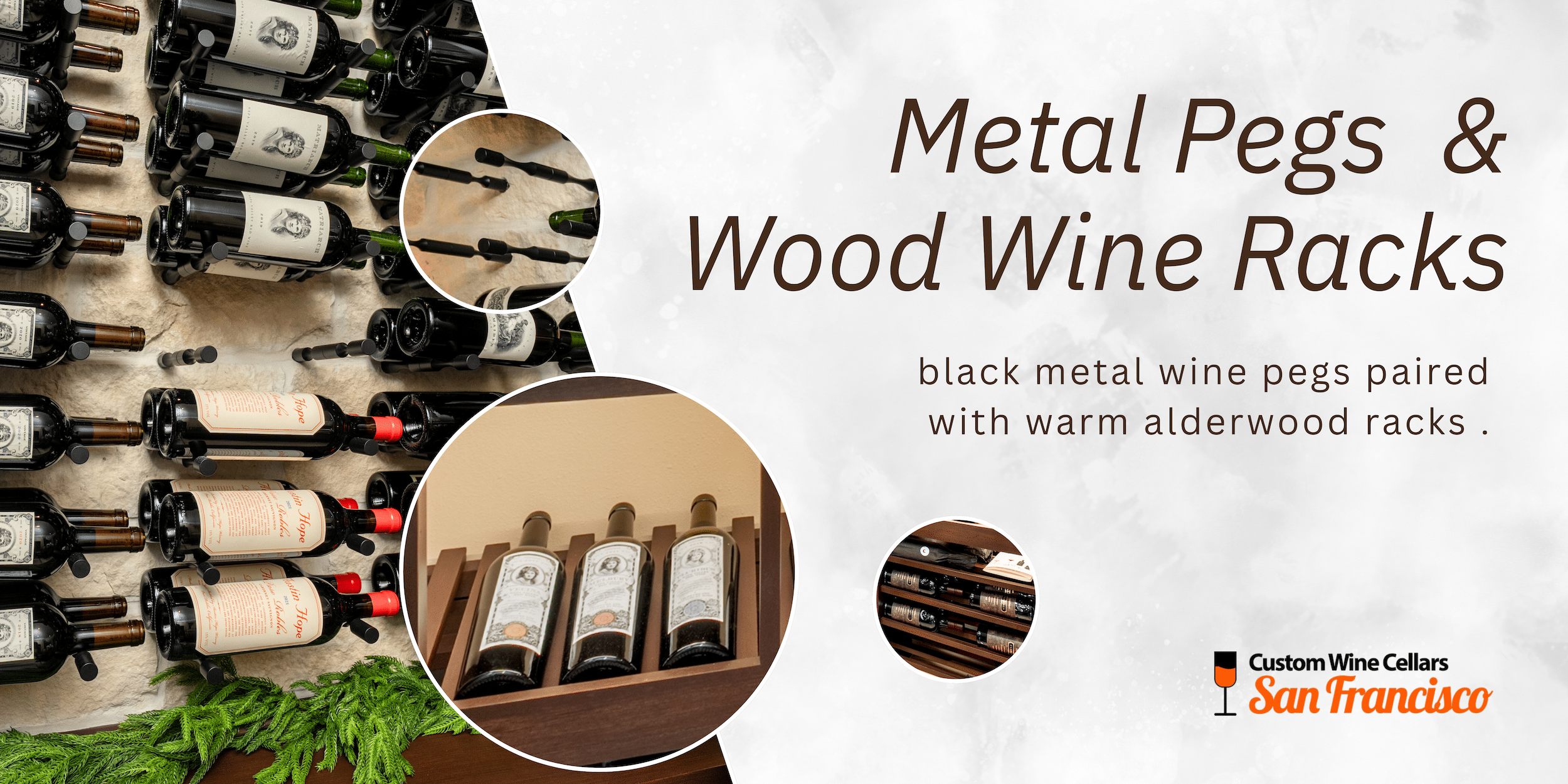
The limestone wall holds metal pegs that support bottles horizontally, creating a floating effect that makes the wine appear suspended in midair. This approach keeps labels clearly visible while adding an artistic dimension to the display.
Custom wood racks complement the metal pegs, finished and sealed for durability. These racks include horizontal bottle displays, reveal rows for featured selections, and larger compartments designed to store full cases.
Inside the dining room glass wine cellar, every element balances form and function—creating a display that feels curated rather than crowded.
Climate Control That Protects Every Bottle
A carefully engineered climate system supports the elegant display and keeps the wine aging under ideal conditions.
The team equipped the cellar with a high-performance ducted refrigeration system rated at approximately 6,600 BTUs, maintaining a stable environment around 55°F with humidity levels between 60% and 70%. These conditions help the collection age properly over time.
They installed the cooling equipment remotely so the system runs quietly—an important detail for a wine room located directly within a dining area. Closed-cell foam insulation improves energy efficiency and helps stabilize internal conditions.
To further protect the collection, the electrical system connects to a generator backup that maintains temperature stability during power interruptions.
Lighting That Enhances the Entire Experience
Lighting shapes much of the cellar’s atmosphere.
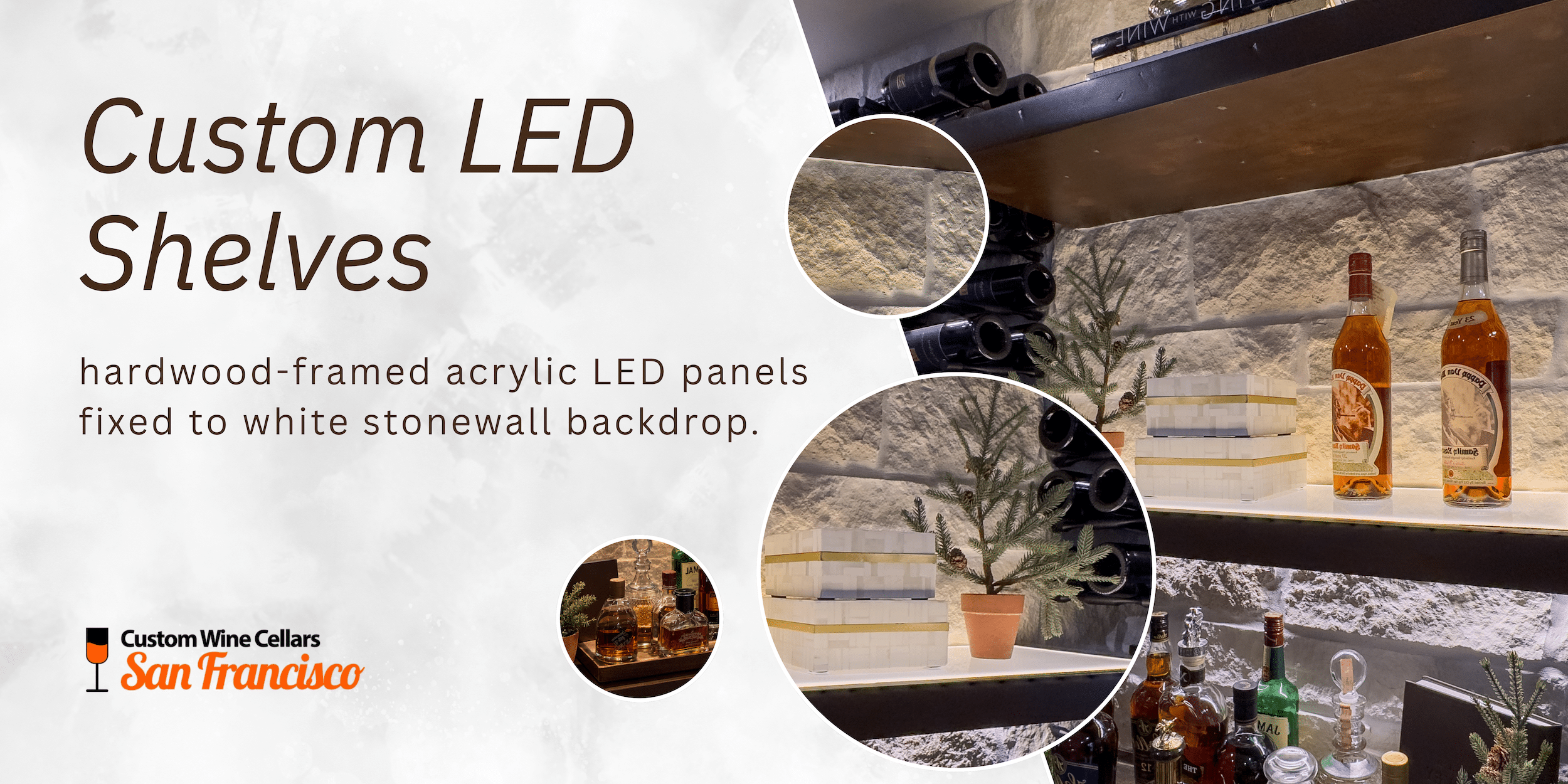
Soft LED fixtures highlight the bottles without overpowering the room. The gentle glow reflects off the glass enclosure while drawing attention to the texture of the limestone feature wall.
At the center of the design, floating display shelves with illuminated acrylic panels showcase select bottles, turning them into the visual focal point of the space.
The result feels refined and inviting rather than theatrical.
A Smart Approach to Door Design
When a Wine Cellar Becomes Part of Daily Living
One of the most compelling aspects of this dining room glass wine cellar is how naturally it integrates into everyday life.
Rather than storing the collection in a distant corner of the home, the design invites interaction. Guests can admire the display during dinner, discuss vintages, and select bottles directly from the cellar without leaving the room.
Smart controls allow lighting and climate settings to be adjusted easily, creating the right atmosphere whether the occasion calls for a quiet evening or a lively gathering.
The cellar becomes more than a storage space—it becomes part of the experience.
Planning Your Own Dining Room Glass Wine Cellar
If you’re considering adding a dining room glass wine cellar to your home, thoughtful planning is essential to achieve both visual impact and proper wine preservation.
 Start by evaluating:
-
The size of your current wine collection
-
How much your collection may grow in the future
-
The architectural style and layout of your home
With the right design approach, even a limited footprint can be transformed into a sophisticated wine display that enhances your living space.
If you’re considering adding a dining room glass wine cellar to your home, working with experienced designers can help turn that idea into a functional and visually striking feature. The team at Cachet Wine Cellars and Custom Wine Cellars San Francisco specializes in custom wine cellar design and installation for homeowners throughout SF—including but not limited to Saratoga, Lafayette, Mill Valley, San Carlos, Cupertino, Danville, Moraga, and more!
—- Because a well-designed dining room glass wine cellar doesn’t just store wine—it transforms how you enjoy it. 🍷